What to Consider
- The nature of the work
- How often it will be used
- The working environment
- The load weight
- The lift height required
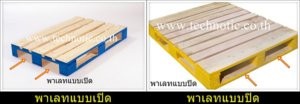
- Pallet size and fork openings — stackers suit open pallets
By Drive System
1. Manual stacker
Lifting and moving are both done by hand. Also known as a hand stacker, manual stacker, hydraulic stacker, mini stacker or platform stacker.
2. Semi-electric stacker
Electric lifting, manual travel. Also known as a semi-automatic pallet stacker.
3. Full electric stacker
Both lifting and travel are powered. Also known as a fully automatic pallet stacker.
Stacker Types
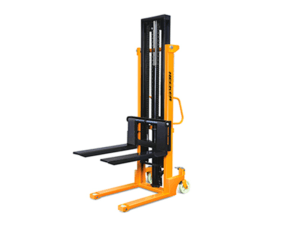
1. Hand Stacker (PA series)
The operator pumps the handle to raise and lower the forks, and pushes or pulls the unit to move it. Choose by load weight and lift height.
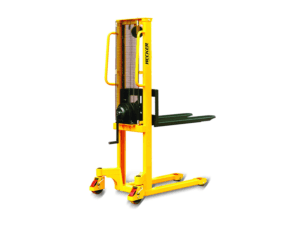
2. Winch Stacker (WS series)
A hand-cranked gear drives a cable that raises the forks. Lowering also uses the crank.
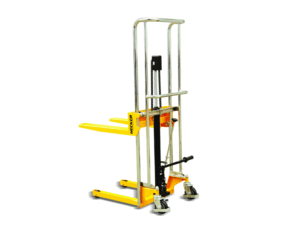
3. Platform Stacker (PJ series, SJ series in stainless)
A foot pedal pumps the hydraulics to raise the forks; a valve is turned to lower. Small and light, suited to offices and tight spaces. An electric version is available.
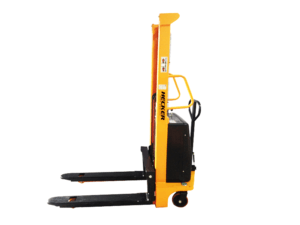
4. Semi Electric Stacker (SPS series)
Electric lifting with manual travel. Suited to high lifts and reduces operator effort.
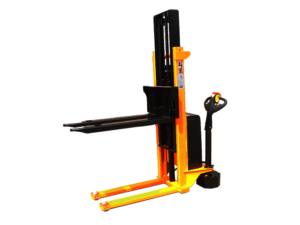
5. Full Electric Stacker (EPS series)
Electric lifting and travel — the fastest and least physically demanding option.